Skip to content
How Swapping the Dining Table Can Refresh Your Dining Room Without a Full Remodel
- by Bicroom Editorial
FURNITURE JOURNAL
How Swapping the Dining Table Can Refresh Your Dining Room Without a Full Remodel
A single dining table change can reset the feel of a room, especially when you want a faster, lower-cost update than replacing all your decor. Here’s how to think about shape, finish, fit, and everyday usability so the new table improves both the look and the rhythm of daily life.
Why the dining table has outsized visual impact
If your dining room feels tired, you do not always need new wall art, a full textile refresh, or a complete furniture overhaul. In many homes, the dining table is the first piece people notice and the one that quietly sets the tone for the whole room. A single replacement can make the space feel more current, more organized, and more aligned with how you actually live.
That is what makes a dining table swap such a smart home update. The table occupies the center of the room, so its shape, color, and material finish naturally influence the atmosphere around it. A darker, heavier-looking table can make the room feel more formal. A lighter wood tone can open things up and soften the mood. A clean-lined table can shift the space toward a more Nordic modern feel without changing every other piece around it.
This kind of change is especially appealing when you want a noticeable result on a practical budget. Instead of replacing everything at once, you can let the table do the visual heavy lifting. The room still feels new, but the upgrade is focused and easier to manage.
- The dining table is often the room’s main visual anchor.
- A new table can shift mood without changing every accessory.
- Shape and finish affect whether the room feels formal, relaxed, or modern.
Choosing shape, material look, and style for a faster update
When you are trying to improve dining room atmosphere quickly, style choices matter more than trend-chasing. The goal is to choose a table that looks intentional in your home, not just attractive in a product photo. For many US homes, that means looking at simple silhouettes, balanced proportions, and finishes that play well with everyday surroundings.
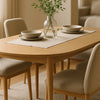
Wood grain texture remains a reliable choice because it adds warmth without overpowering the space. It can make a room feel more grounded and welcoming, especially if your current dining area leans plain or overly glossy. If you prefer a lighter, cleaner look, a table with a restrained Scandinavian-inspired profile can bring in that Nordic modern ease people often want from a dining area update.
Shape also changes how the room reads. Round tables tend to soften the atmosphere and can make smaller dining areas feel less rigid. Rectangular tables often feel more traditional and may work well when the space needs structure. The right choice depends less on abstract design rules and more on how you want the room to feel when you walk in.
Color and surface finish should also support the rest of the room. If your chairs, rug, or flooring already have strong visual character, a simpler table may create better balance. If the room is very quiet visually, a table with a stronger wood presence can provide the interest the space has been missing.
- Wood grain can add warmth and visual depth.
- Clean-lined forms help create a Nordic modern feel.
- Round and rectangular shapes influence the room’s mood differently.
- Match the table’s visual weight to the rest of the room.
Buying for real life: size options, setup, and moving convenience
A good dining table should look right and fit right. That sounds obvious, but it is easy to get distracted by finish and forget how the table will function in your actual room. Before buying, think about how the table fits your daily routine, how often you move it, and whether the size options align with how many people eat there on a normal weekday versus special occasions.
Size flexibility is especially useful in family homes and apartments where the dining area may do double duty. You may need the table to support meals, work sessions, homework, or weekend entertaining. A table that fits the room well can make those transitions feel smoother, while one that is too large or too small can make the space feel awkward no matter how attractive it is.
Installation and moving convenience also matter. If you live in a walk-up, expect future rearranging, or simply want less hassle on delivery day, a table with manageable components can be easier to handle. Buyers often focus on the look first, but the best value usually comes from the combination of appearance, reasonable setup effort, and practical adaptability.
That is where value for money becomes more than a price tag. A table that suits the room, is easy to place, and does not create unnecessary friction in daily life usually earns its place faster than a more expensive piece that only looks good in theory.
- Check room fit before thinking about styling.
- Choose a size that supports both daily meals and occasional gatherings.
- Consider delivery, assembly, and how easily the table can be repositioned.
- Value comes from both appearance and usability.
Daily use matters: easy cleanup, durability, stability, and family-friendly edges
Once the table arrives, the way it feels in daily use matters just as much as the first impression. Dining rooms are not just display spaces. They are where children do homework, parents set down mail, guests linger over coffee, and everyday life keeps moving. A table that supports those routines well will usually be the one people appreciate most after the excitement of the purchase wears off.
Easy cleaning is one of the biggest reasons people choose to replace a dining table in the first place. Nobody wants a beautiful piece that makes everyday spills feel stressful. A surface that is simple to wipe down and does not demand constant attention is often the most realistic option for busy households. That practical ease can make the entire dining area feel calmer.
Stability is another important quality, especially in family homes. A table should feel steady when people lean on it, eat together, or set down heavier serving pieces. A stable feel also helps the room seem more composed and well made. Even if buyers do not think about it first, they usually notice it immediately when a table feels solid.
Family safety also belongs in the conversation. Edge shape and overall design can affect how comfortable a table feels in a home with children or high foot traffic. Softer visual profiles can feel less harsh in the room and may be a better match for households that want a more relaxed, livable dining setup.
- Choose a surface that supports easy everyday cleanup.
- Prioritize a table that feels stable in normal use.
- Think about edge shape in homes with children or frequent movement.
- Practical comfort often matters more than showroom appeal.
How to match the new table with chairs, lighting, and flooring
A dining table change feels most successful when it works with what already exists. That is especially true if you are trying to upgrade on a budget. The good news is that you do not need to replace every piece at once to make the room look intentional. In fact, keeping some elements the same can help the new table stand out even more.
Chairs are often the easiest place to start. If you already have chairs you like, look for a table finish that complements them rather than competes with them. A wood-grain table can work well with upholstered chairs, simple metal frames, or mixed seating as long as the visual balance feels calm. If your chairs have a bolder shape, a quieter table can keep the room from feeling crowded.
Lighting is equally important. A dining pendant or chandelier can either reinforce the table’s style or create tension with it. Clean modern lighting often pairs well with a table that has a restrained profile, while more decorative fixtures may call for a table that feels a bit warmer or more traditional. The goal is not perfect matching. It is coordination.
Flooring also affects the final look. A light floor can make a darker table feel grounded, while a darker floor may benefit from a lighter table that keeps the space from feeling heavy. When the table, chairs, and floor all belong to the same visual conversation, the whole room reads as more polished without requiring a full redesign.
- Keep existing chairs if they still work well.
- Use lighting to support the table’s style direction.
- Let flooring guide whether the table should contrast or blend.
- Coordination matters more than perfect matching.
A low-budget upgrade strategy that still feels intentional
For homeowners who want the biggest visual change with the least disruption, a dining table swap is one of the most efficient upgrades available. It can shift the room’s mood, improve everyday function, and give the impression of a more complete redesign without requiring a full soft-furnishing replacement.
The smartest approach is to treat the table as the anchor and let everything else support it. Start with how the room feels now, then decide whether you want it warmer, lighter, more modern, or more family-friendly. From there, choose a table that fits the space, suits your routine, and visually connects to the pieces you already own.
When a dining room begins to feel dull, the answer is not always more decor. Sometimes the most effective solution is simply a better table. That single change can create a stronger dining room atmosphere, make the space feel upgraded, and deliver a level of everyday usefulness that more decorative updates often cannot match.
- Think of the table as the room’s anchor piece.
- Choose a style direction before shopping.
- Focus on fit, function, and visual harmony.
- One well-chosen table can refresh the room faster than a full makeover.
Frequently asked questions
Why does replacing just the dining table make such a big difference?
Because the table sits at the center of the room and visually guides everything around it. Changing its shape, finish, or style can quickly alter the dining room’s mood even if the chairs and decor stay the same.
What should I compare first when buying a new dining table?
Start with room fit, then look at style, finish, and daily usability. A table that suits your space, works with your existing chairs, and feels easy to live with will usually be a better long-term choice than one that only looks good in a photo.
How can I make sure the new table works with my current dining room?
Use your existing chairs, lighting, and flooring as guides. Aim for coordination instead of perfect matching, and choose a table whose visual weight and material feel fit the rest of the room.
- Posted in:
- dining room styling
- dining table refresh
- easy to clean
- English
- family safety
- Furniture Design
- home upgrade
- Nordic modern
- stability
- value for money
- wood grain texture